
StageMoto.fr

⚠️ Temporary suspension of services

Fenek Rally: a new challenge in the desert

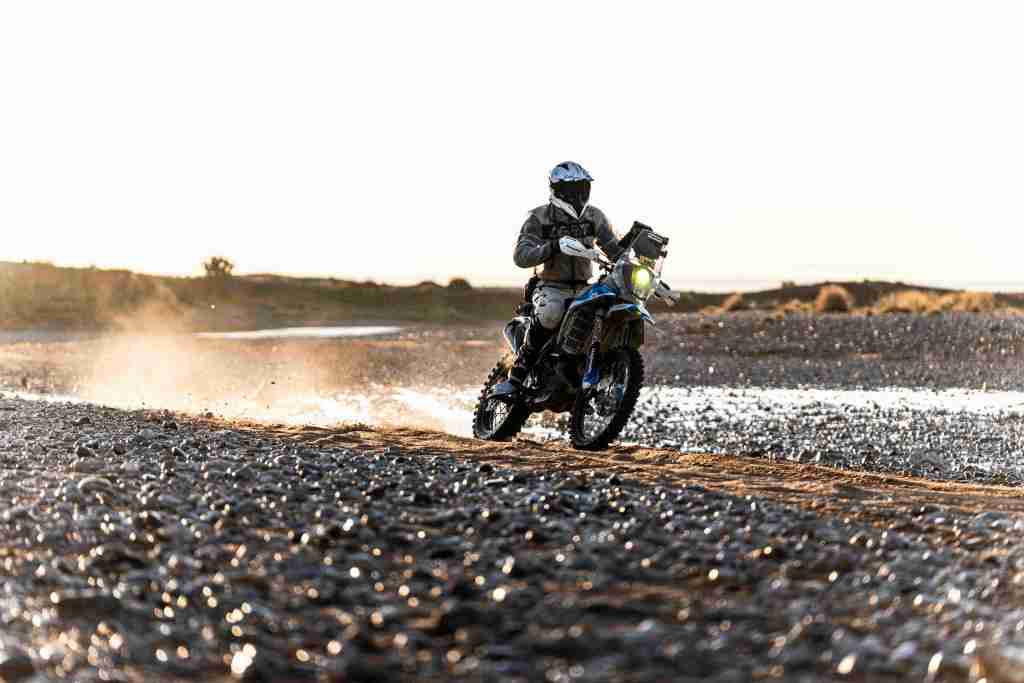
After sharing my impressions of the Bosnia Rally and the Dinaric Rally, this Fenek Rally marked my first participation in a competition outside Europe. After several years of traveling and training in Morocco, the desert was no longer unfamiliar to me. I had driven countless tracks, explored the wide open spaces between Merzouga and Zagora, and crossed dune chains over and over again. I had even created my own roadbooks to refine my navigation skills.

It was a symbolic milestone for me: leaving the Alps and Eastern Europe behind to enter the legendary playground of rally-raids.

In summary

The Fenek Rally offered me a short but intense experience in the heart of the Erg Chebbi dunes. An accessible, well-organized rally, designed for beginners and intermediate drivers who want to discover the desert in complete safety. The roadbook was clear and simple, the stages varied, and the atmosphere very friendly. Despite a few logistical issues around the paddock that could be improved, overall it remains an excellent introduction to African rally raids. For my part, after six days of consistent racing without any major mistakes, and thanks to the support of TCS Motos, I finished 4th in the overall standings.

Sébastien Vry Fenek Rally

My experience in detail

Sébastien Vry Fenek Rally

The rally took place over six stages, including a prologue to determine the starting order for the first stage.

  • Prologue (32 km): A great start: I quickly adapted to the roadbook and the terrain despite not having driven in the desert for 10 months. I finished in 2nd place.
  • Stage 1 (207 km): I found a good rhythm and felt good. A fast and clean special stage, without taking any unnecessary risks. I finished 4th in the stage. I learned that the prologue did not count towards the overall classification, so I found myself up against three experienced pilots.

  • Stage 2 (209 km): A mentally difficult day: my aluminum navigation support broke in the morning. Several stops for makeshift repairs led to lost time and navigation errors. But I made up for it in the final 10 km of big dunes. I limited the damage by finishing 14th.

  • Stage 3 (231 km): A difficult night with fever and blocked sinuses, but I set off at 6:40 a.m. A cold, fast, and smooth special stage, I take care of the navigation, which remains easy but can be costly in terms of penalties. In the end, zero penalties and 7th place in the stage. I moved up to 4th place overall.


  • Stage 4 (188 km): My goal was to secure my 4th place. I rode cleanly, without any crashes or mistakes, on a mix of off-road terrain and small dunes. A steady pace allowed me to secure 7th place and maintain my lead in the overall standings.


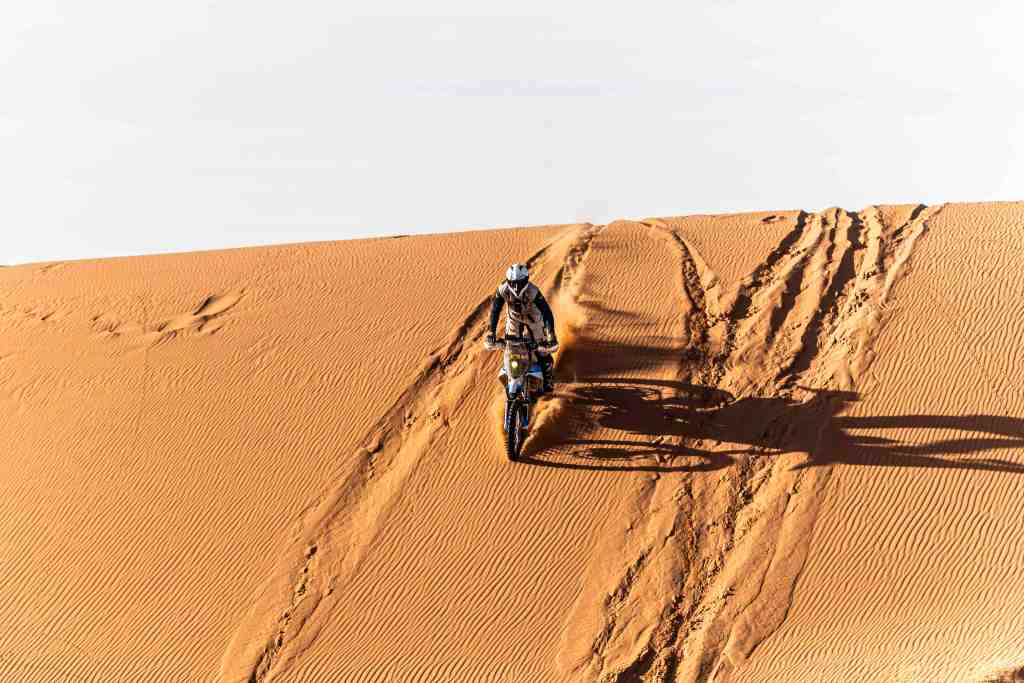
  • Stage 5 (54 km): An intense loop in the large dunes of Erg Chebbi. I ride cautiously at first, then accelerate towards the end. Yaro  (@sandisinyourhead) catches up with me and we finish the last 20 kilometers together, each following our own track. I achieve a very good 6th place time, which definitively confirms my 4th place overall.
Sébastien Vry Fenek Rally

A welcoming organization

Sébastien Vry Fenek Rally

The Fenek Rally is organized by a Spanish team that is friendly, approachable, and always ready to help. The briefings were well thought out and available in English, French, and Spanish—a real plus for international drivers.
The staff was present, responsive, and able to adapt to last-minute requests. On this point, there were no complaints.

However, not everything was perfect.
The paddock set up around the hotel was a little impractical, especially for those of us who weren’t staying there. As the main hotel was fully booked, we were staying 500 meters away, which made daily organization slightly more complicated.

The format of the rally was designed to accommodate motorcycles, 4x4s, and SSVs. There were only tracks and wide off-road trails with moderate dune crossings. This isn’t a flaw in itself, but it’s good to know if you’re hoping for very narrow or very technical trails or challenging terrain over a long distance.

Roadbook: clean, efficient

The roadbook was clean, precise, and no-frills. No unnecessary boxes, no superfluous details: just the essentials

For a novice driver, this works very well. To make navigation even smoother, it would sometimes have been useful to have a little more visual context or a few additional obvious landmarks.

The decision to display an average heading between each box is clearly aimed at beginners: it simplifies reading, helps stabilize orientation, and makes the rally more accessible.

More surprising:
one waypoint for each box, with a 10-minute penalty if you miss a single one.

This choice may be disconcerting to those accustomed to more traditional rally raids, where small shortcuts are sometimes taken when the terrain allows.
But the intention here is clear:

  • maximum safety
  • avoid dangerous off-roading
  • prevent unexpected shortcuts
  • force beginners to follow the exact route
  • allow for precise recalibration of the odometer
It is a very structured format, really suited to inexperienced drivers.
Sébastien Vry Fenek Rally
A fast, demanding track… but less brutal than in Europe

Contrary to what some people imagine, the desert is not the most destructive terrain. In the dunes and vast plains of Morocco, you ride fast, there are vibrations, dust, sand… but overall it’s less violent than the rough tracks of Eastern Europe!

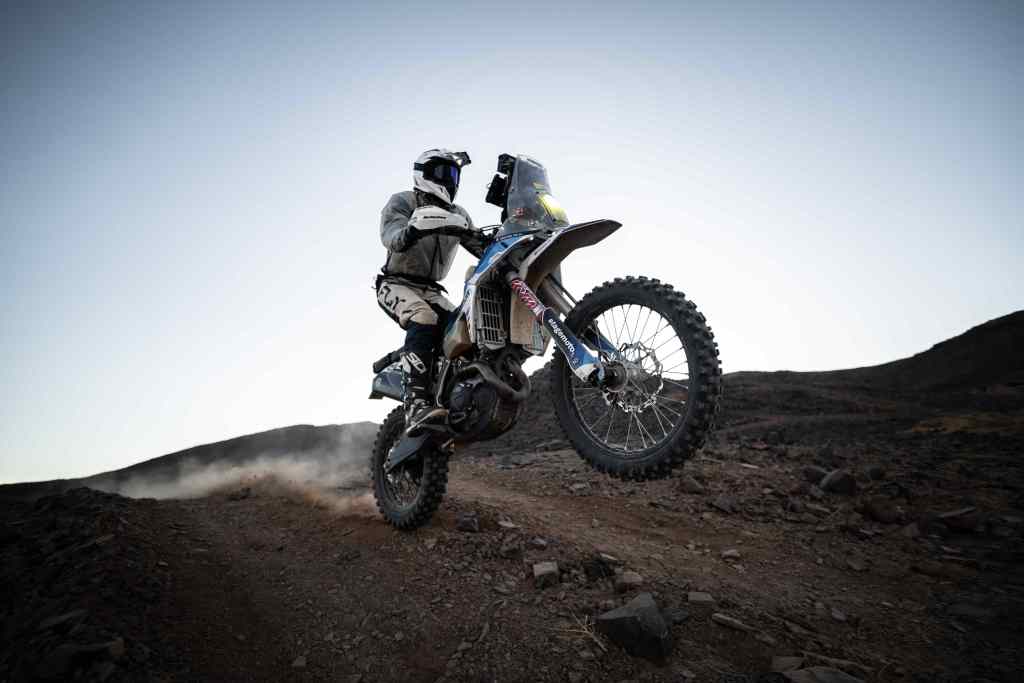
After the Bosnia Rally and the Dinaric, my bike had accumulated quite a bit of wear and tear—that’s mainly where my broken bracket came from. Fine adjustments to the chassis and suspension can clearly help in this type of fast, rolling terrain.

A mix of levels… and lots of beginners

As is often the case in desert rallies, there was a mix of skill levels, but mostly a lot of beginners. Some were discovering the roadbook for the first time. Others had never driven in the dunes before this rally. And every time, it surprises me a little.

The desert is magnificent, but it does not forgive improvisation.
The distance, isolation, fatigue, stress… everything can amplify the slightest mistake.

The problem is that this lack of experience sometimes leads to avoidable injuries or serious mechanical breakdowns and therefore premature retirements.

The keys to preparing well for a rally raid in Europe

From my experiences, I have identified several key points for those who wish to take part in a rally such as the Fenek Rally:

  1. Navigation: know how to read a roadbook, anticipate pitfalls and stay focused on the route even after several hours of riding.

  2. Physical condition: endurance is key. This is not a oneday race but a marathon lasting almost a week.

  3. Mechanical management: prepare your motorbike to cope with varied terrain and learn the basics of daily maintenance to avoid having to drop out due to an avoidable breakdown.

  4. Mental: stay focused, even when fatigue sets in or navigation becomes tricky. A rally is won as much in the mind as on the track.

  5. Logistics: choose and organise your equipment, nutrition and recovery times carefully. Every detail counts when you’re racing for six days straight.

An experience not to be missed

The Fenek Rally is a condensed version of desert rally raid: demanding, educational and incredibly enriching on a human level. For me, it was an opportunity to continue to progress, test my limits, but also to see that the training I give during the courses pays off in the field.

Those considering embarking on the adventure of rally raids will find this type of event an ideal gateway before moving on to major African rallies.

🔔 Receive upcoming articles

Don’t miss out on our exclusive articles about the world of motorcycling! Subscribe to receive tips, tricks and the latest trends directly in your inbox to enhance your riding experience. Join our community of enthusiasts and stay up to date with our publications!